

Why Does Winter Light Feel Sharper?
– The role of shadow beneath strong light
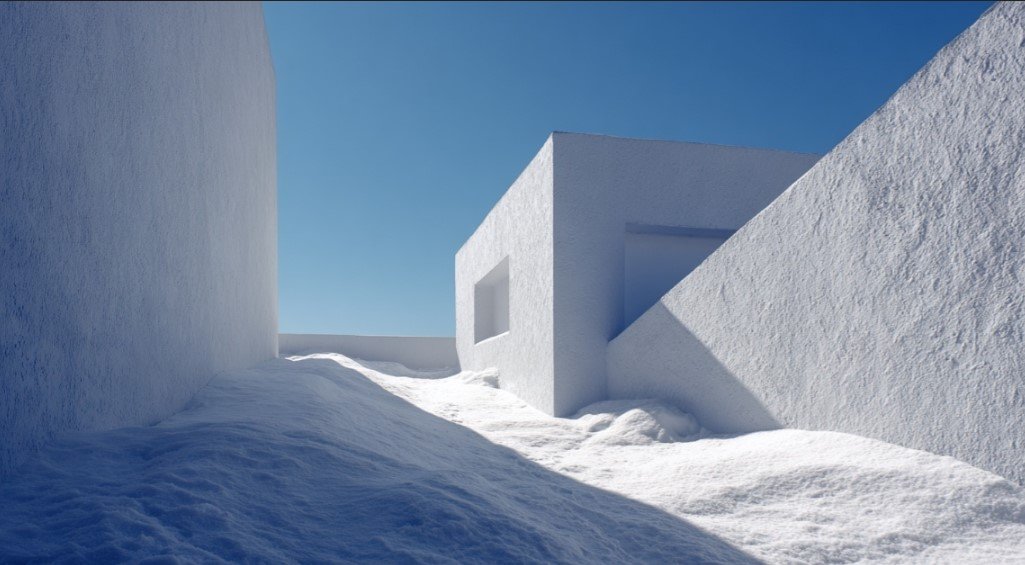
Under the sharp winter sun, every plane becomes precise, and every shadow deepens to hold the form in place.
Winter feels unusually bright.
Why does winter sunlight seem clearer?
Why do shadows appear more defined in colder months?
Many people say it is because the air is clearer.
In winter, humidity is lower and the atmosphere is more transparent.
Light scatters less and travels more directly.
So even though the sun is the same,
its presence feels firmer, more precise.
When snow covers the ground,
the world appears brighter still.
But if you stand quietly and look at the light itself,
it becomes clear that it is not only the snow.
Winter light does not gently wrap around objects.
It reveals planes.
Edges become sharper.
Shadows deepen.
But darkness grows deeper
Shift your gaze slightly,
and the unlit planes remain.
In fact,
the stronger the light,
the deeper the shadow.
The larger the bright surface appears,
the more substantial the darker plane becomes behind it.
A form never stands
on brightness alone.
There is always a hidden surface,
a plane untouched by light,
a structure not immediately visible—
holding everything in place.
What winter light quietly suggests
Why are we drawn to winter light?
Perhaps it is not because darkness has vanished,
but because we can clearly see
that it still exists.
The stronger the light,
the sharper the contrast.
A form is complete
only when bright surfaces
and the darker planes that support them
exist together.
This principle does not change—
in drawing,
in sculpture,
or in virtual space.
And it does not change in life.
Brightness briefly pushes darkness aside
When something feels extremely bright,
it is often because the darker parts seem temporarily hidden.
Under winter sunlight,
there is a momentary illusion
that darkness has disappeared.
Bright surfaces expand.
Forms appear clean and distinct.
For a moment, there is relief.
If we focus only on what is illuminated,
the darker side feels absent.
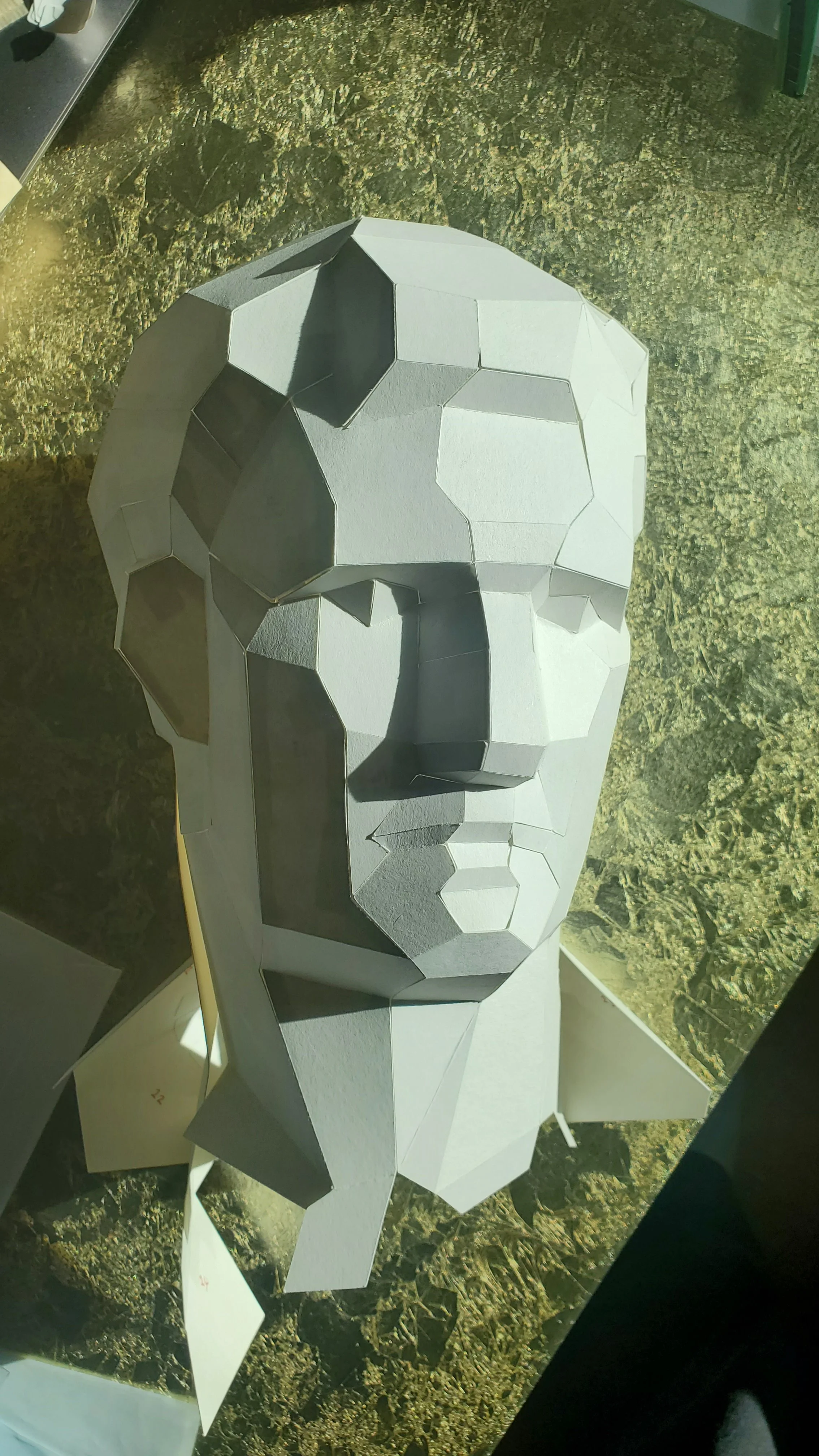
Under strong winter light, the illuminated planes grow brighter— and the shadowed planes deepen to hold the structure together.
This text speaks of light,
but it is really about structure.
Winter sunlight feels sharper
not because darkness has disappeared,
but because contrast has become clearer.
Just as a form requires both sides to stand,
brightness does not exist
to erase darkness.
It simply reveals
that darkness remains—
quietly,
essentially,
always supporting the form.
Light reveals.
Darkness sustains.
LUMISCA builds the structure.