

An Edge Is Not a Boundary, but a Connection
- An edge is not a boundary. It is a connection.
- Even in a time of rapid change, connections are closer than we think.
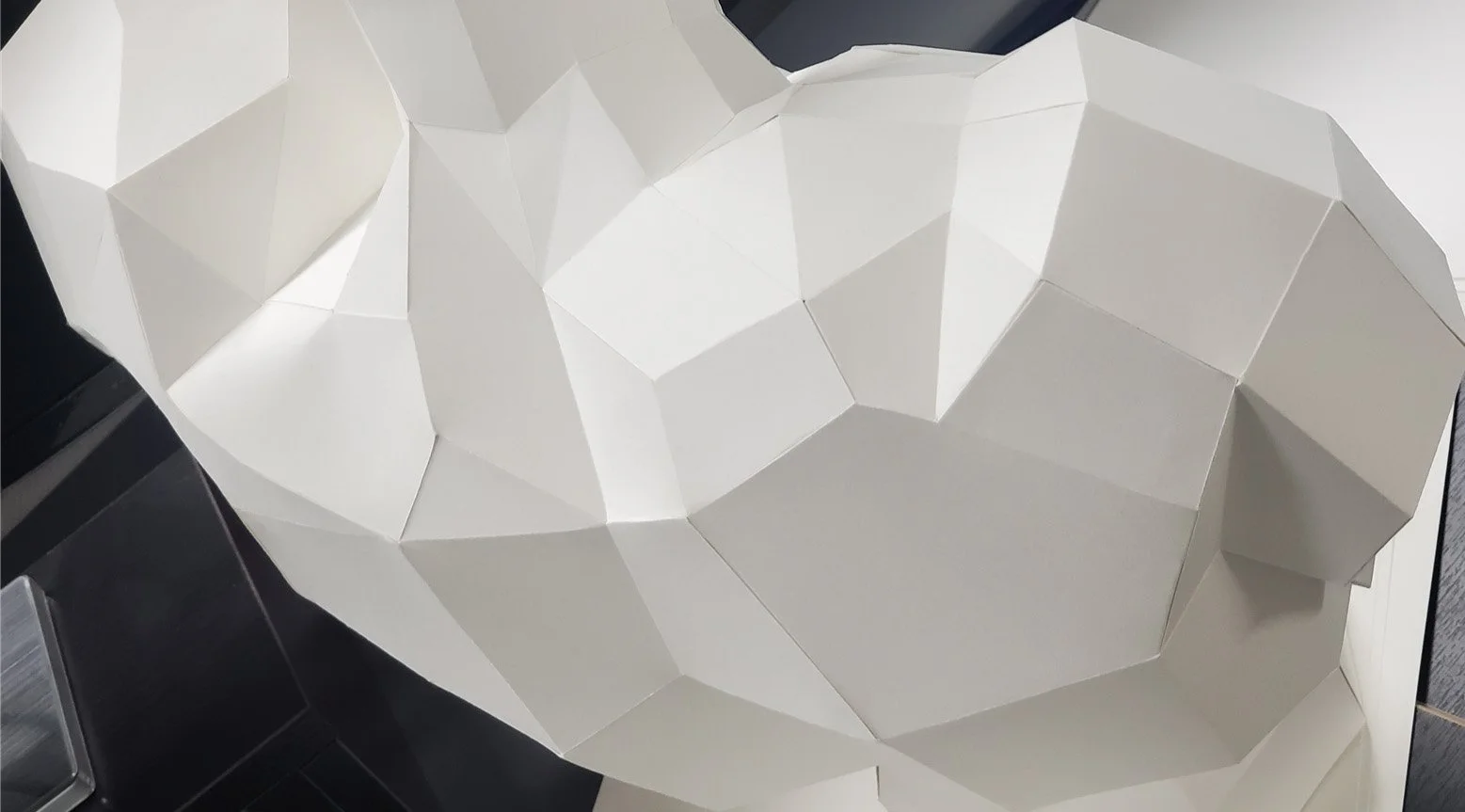
This image shows how an edge functions not as a division, but as a continuous flow of connection.
We usually think of an edge as a boundary—
a sharp line where something ends
and something else begins.
A clean division.
A clear cutoff.
But in LUMISCA,
an edge is not a blade that separates lines.
It is closer to an extension—
a continuation that leads into the next plane.
Planes do not break apart
In paper structures,
each plane may appear as an independent piece.
But in reality,
they remain continuously connected
through edges.
These edges divide large areas of light and shadow,
while at the same time
guiding the flow toward the next tonal shift.
What begins at the head
passes through the chest
and continues downward—
unbroken, uninterrupted.
Productivity comes from connection
In LUMISCA,
a form does not hold together
because its planes are rigidly fixed.
It holds because
each plane naturally supports the next.
Work is no different.
There is no need to start everything from zero.
What you are doing now
can carry forward.
When edges are read carefully,
connections appear more often than expected.
How LUMISCA sees the edge
An edge
is not a boundary.
It is the point where a flow changes direction—
a brief transition before entering the next plane.
That is why LUMISCA does not emphasize edges themselves,
but the flow of connection they create.
Because that flow
is what shapes form,
and allows thought to continue.
This is not a guide meant to teach technique.
It is simply an attempt
to leave a small hint—
that in a rapidly changing world,
the place where you stand now
may not be an ending.
An edge, after all,
is not a boundary,
but a connection.
When light changes, connections change
Even when the form stays the same,
a change in lighting
gives the edge a completely different role.
At times,
it sharply defines contrast.
At other times,
it softly bridges one plane to the next.
An edge does not carry a fixed answer.
It is a place where interpretation shifts
depending on context.
This is a story about form—and about work
In times like these,
when the shape of work changes rapidly,
many people quietly feel this:
I don’t know where my role begins or ends.
I’m not sure if what I’m doing now will carry forward.
But when we look at an edge
not as an ending,
but as a connection,
our thinking shifts slightly.
What feels like a stopping point
may simply be a transition—
a passage into the next plane.
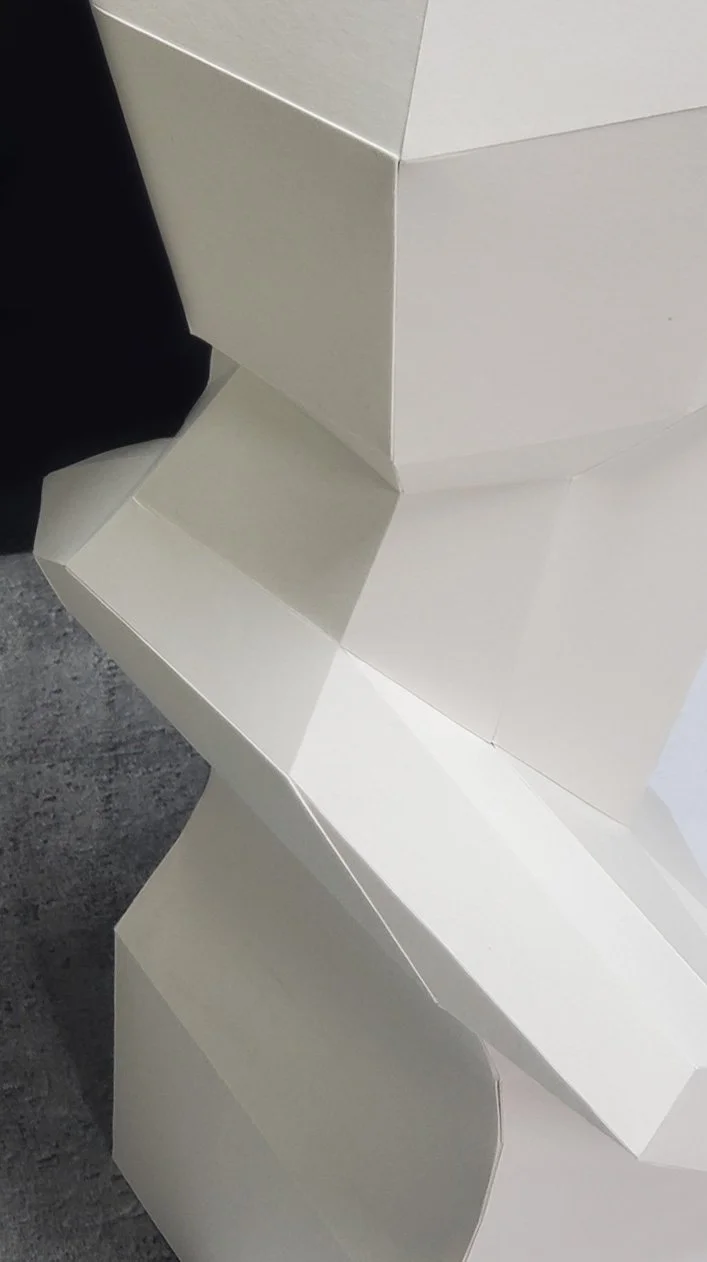
Here, the edge does not stop the form—it redirects it, allowing the structure to continue