

My First Story of Light and Shadow
An Explanation of How Anxiety and Stability Can Coexist
For a long time, I have thought of light and shadow not simply as visual elements, but as a principle—almost a structure of life itself.
At the center of this belief is one sentence that has stayed with me for years:
“The darkest surface always touches the brightest one.”
I came to understand this idea when I was in high school, studying plaster drawing while preparing for art school.
Most of my days were spent in front of plaster casts, drawing them again and again.
Drawing, I learned, was not about copying shapes.
It was about asking a deeper question:
Where does this object exist in space?
One day, my instructor said something that left a deep impression on me
“The brightest surface is not bright by accident.
It exists because the darkest surface is right beside it.”
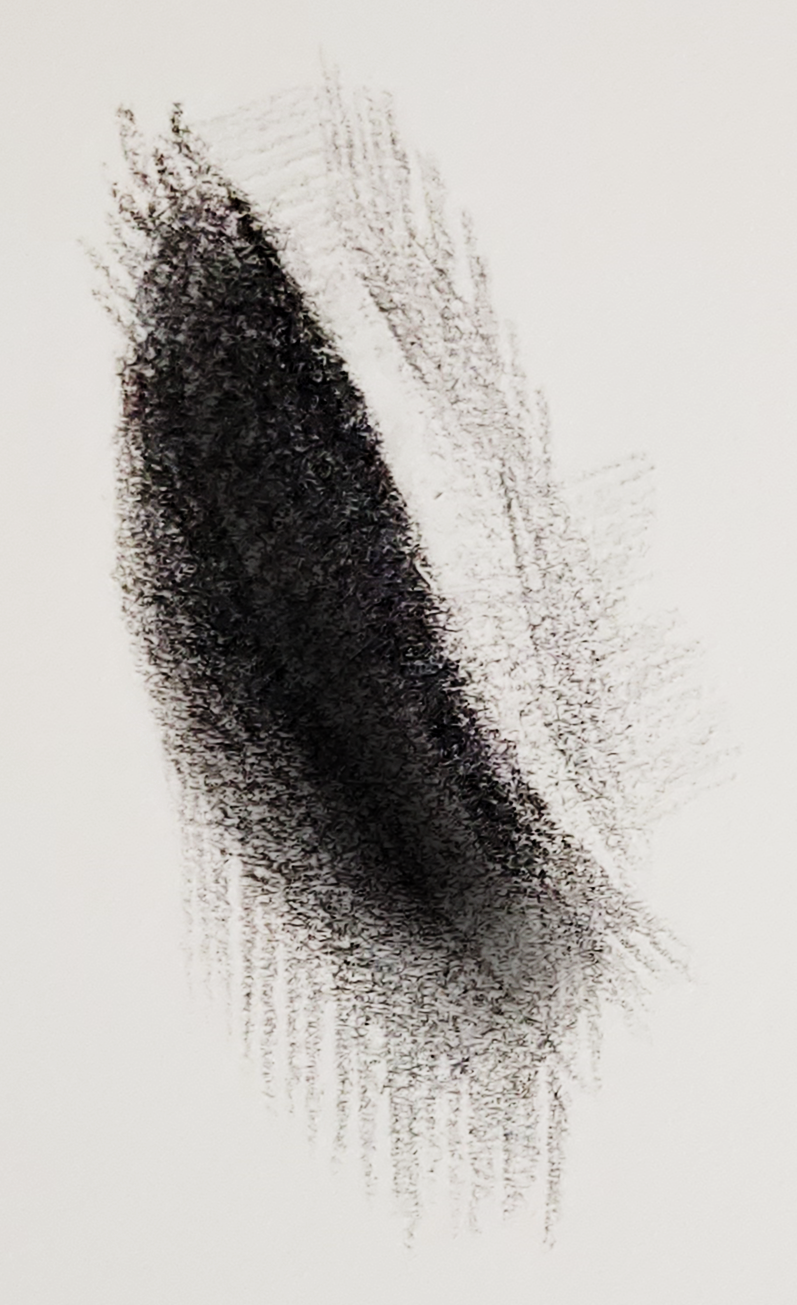
On paper, the brightest areas are not something we draw.
They are spaces we intentionally leave untouched to represent light itself.
In that sense, drawing is not about adding, but about revealing—
bringing out what already exists through graphite and pressure.
And there is a rule that always applies.
Behind the brightest surface, the darkest surface must exist.
That darkness may appear fragmented—
broken into curves, folds, dispersions, or wide tonal spreads.
Sometimes it is so subtle that we barely notice it.
But eventually, all of these elements gather
and settle beneath the brightest surface.
At that time, my life itself was passing through a very dark period.
My father passed away when I was in middle school.
My mother ran a small neighborhood hair salon, doing her best to survive.
I had been drawn to art—drawing, making, creating—since elementary school.
Preparing for art school felt less like a choice and more like a natural path.
But back then, even the thought
“I will overcome this”
or
“I will become someone great”
felt like a luxury.
I was not trying to win.
I was simply living.
Perhaps that is why the idea—that darkness accompanies brightness—
gave me a quiet sense of comfort.
I couldn’t fully explain it at the time.
I didn’t yet understand what a “difficult life” really meant,
nor did I recognize my own life as one.
But through drawing, through experiencing this principle physically and repeatedly,
my way of seeing life slowly shifted.
Even in dark and difficult moments,
I began to sense that light must exist somewhere nearby.
That belief became a small but steady foundation—
something that allowed me not to let go of hope entirely.
Psychologically speaking, I would be described as a hopeful thinker:
someone who, even in hardship, believes that things can still turn out well.
And at the beginning of that mindset
was this simple understanding of light and shadow.
This is my first story about light and shadow.
In future posts, I plan to leave behind visual examples—
drawings that show how dark and bright surfaces meet,
how they depend on each other,
and how this relationship takes form through paper and structure.
For now, this text stands as the opening page of that journey.