A Small Experiment with Light and Shadow
Just because a surface receives a lot of light
does not mean it will appear bright to our eyes.
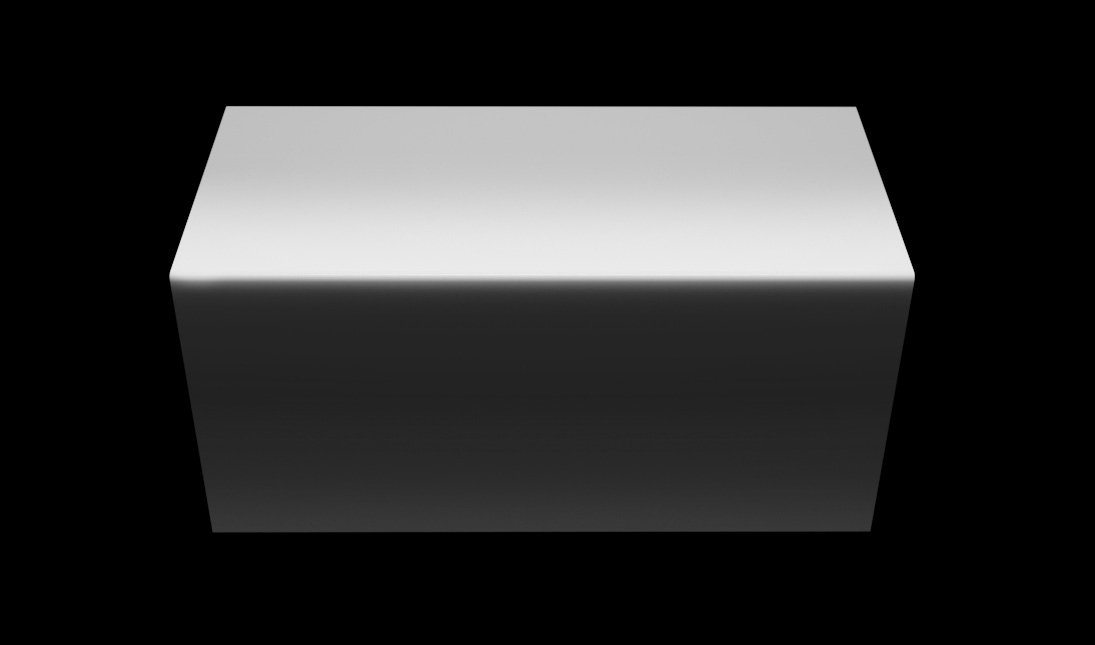
Imagine a surface that is facing a light source directly.
It receives the strongest light possible.
But if that surface is turned sideways from our point of view,
we can barely see it.
The light is strong,
yet it is almost invisible to us.
Now imagine the opposite situation.
The surface faces us directly,
so we can clearly see it.
But in this case,
the light barely reaches it.
In the end, the brightness we perceive depends on two conditions.
How much light the surface receives.
And how much of that surface we can actually see.
There is a moment where these two factors reach a balance.
If we calculate it,
the brightest visible point appears around 45 degrees.
It is the moment when light and viewpoint
find their balance.
But real forms are not made of a single surface
This experiment assumes only one flat plane.
But real sculptures are not made of a single surface.
If we look at sculptures or architecture,
we see many planes folded and angled in different directions.
Paper sculptures are the same.
They are not one surface,
but many surfaces folded at different angles.
And this is where something interesting happens.
Shadow is another form
What is interesting is that darkness is not simply the absence of light.
Sometimes one surface blocks the light from reaching another.
That is how a shadow is created.
And that shadow becomes another form within the structure.
The form created by light,
and the form created by shadow.
When these two exist together,
space gains depth.
Technology and humanity
This idea feels strangely similar to the world we live in today.
Artificial intelligence is becoming capable of doing many things.
It can paint.
It can write.
It can compose music.
Some people feel uneasy about this change.
In the presence of such powerful technology,
it can feel as if humans are slowly disappearing.
But light alone cannot reveal a form.
Without shadow,
we cannot see shape.
Perhaps the relationship between technology and humanity
is similar.
If technology is the light,
then humans may be another surface
that gives that light meaning.
LUMISCA
LUMISCA begins with this relationship.
Light reveals form,
and shadow supports it.
Brightness alone cannot create shape.
Darkness alone cannot reveal it.
Only when light and shadow meet
do we finally see form.
And that is where
I create my sculptures.
The 45-Degree Law of Light: Balancing Form and Shadow in the AI Era
But real forms are not made of a single surface
This experiment assumes only one flat plane.
But real sculptures are not made of a single surface.
If we look at sculptures or architecture,
we see many planes folded and angled in different directions.
Paper sculptures are the same.
They are not one surface,
but many surfaces folded at different angles.
And this is where something interesting happens.
Light and darkness created by folded surfaces
When multiple surfaces bend in different directions,
each surface receives light in a different way.
Some surfaces face the light directly
and become bright.
Some surfaces receive light at an angle
and create soft gradients.
And some surfaces receive almost no light at all
and fall into darkness.
Within a single structure,
brightness and darkness exist together.
This contrast is what allows us to perceive form.
If every surface had the same brightness,
the object would appear flat.
But when surfaces fold and angle differently,
each plane reflects light differently.
And that difference
creates depth.
Paper and light
I make sculptures out of paper.
Paper is a simple material.
But once it is folded,
countless angles are created.
Each surface receives light differently.
Some surfaces become bright.
Some remain dark.
Some become shadows.
And through this interaction,
a new structure appears on the paper.
It is not only a sculpture made of paper.
It is a sculpture created
by light and shadow together.